


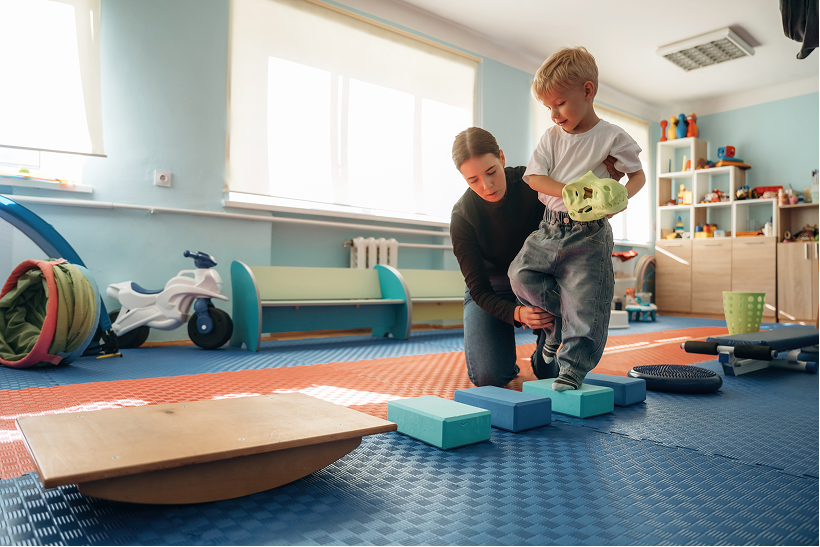

As a leading Sydney paediatrician , HealthSync Care provides access to compassionate, effective paediatric care, psychology services and family guidance — including child occupational therapy. Our caring team works together to understand your child’s needs and create a clear path toward emotional and developmental growth.
Every child’s developmental journey is unique, and our child psychologist Sydney services are designed to reflect that individuality. We take the time to listen to your concerns, observe your child, and conduct targeted assessments that align with your child’s specific needs.
If you’ve been referred to a paediatric occupational therapist, or are independently researching options for your family, you might be wondering; what does an occupational therapist do for a child? How can this kind of therapy benefit my child, and how can I, as a parent or educator, identify when these services are needed?
What is the role of a child occupational therapist?
Chiefly, occupational therapy for children focuses on improving motor, cognitive, and sensory skills, which in turn improves their confidence. This can be particularly helpful for children with ASD, ADHD, developmental delays, or problems with fine motor skills.
A paediatric occupational therapist begins by assessing your child’s strengths and challenges in everyday tasks like dressing, eating, playing, or writing. They use that assessment to develop a tailored therapy plan that focuses on meaningful goals for your child’s daily life.
Depending on your child’s needs, this may include an ADHD assessment Sydney or neurodevelopmental assessments.
Depending on your child’s needs, this may include a fine motor assessment, sensory needs assessment or self care skills assessments.
From there, your occupational therapist will work with your child in guided sessions, using fun, age‑appropriate activities and play‑based tasks to build the skills they’ve identified as priorities. As their skills develop, their confidence should also grow, and you may see improvements at home and in school.
Signs your child may benefit from child occupational therapy:
Children grow at their own pace, but certain patterns can suggest an occupational therapist might be helpful. The need for support is not uncommon, and studies show that 1 in 6 children experience sensory processing challenges that affect everyday activities like dressing, eating and school participation.
Early support often makes everyday tasks easier and helps your child feel more capable in their world.
Specifically, you should look out for:
- Delays reaching expected milestones. If your child is noticeably behind peers in things like crawling, walking, feeding themselves or using basic tools such as pencils and utensils, this might point to a need for support with motor skills or coordination.
- Difficulty with motor skills. This can show up as trouble with fine motor tasks — like holding a pencil, cutting with scissors, fastening buttons or tying shoelaces — or with gross motor skills, like balance, catching a ball, running, hopping or climbing.
- Sensory challenges. Some children are very sensitive to textures, sounds, lights or movement, while others seek out strong sensations — both can make everyday activities harder and may benefit from OT support.
- Struggles with self‑care tasks. Difficulty with dressing, eating independently, brushing teeth or toileting beyond the age you’d expect can be a sign your child would benefit from some targeted support.
- Attention, regulation or social participation issues. If your child finds it hard to stay focused, calm down after upset, manage transitions or participate comfortably with other kids, occupational therapy can offer tools and strategies to help.

What happens during a paediatric OT session?
Every therapy session is different, and the exact approach will depend on your child’s challenges and goals.
Often, therapists will engage children with play-based activities designed to build skills. These might include games that improve hand–eye coordination, balance and body awareness.
Therapists will often work on fine and gross motor skills, which will likely involve simple, everyday tasks like grasping pencils, cutting with scissors, threading beads, and handwriting practice, as well as fun movement challenges (obstacle courses, jumping, climbing), respectively.
The world can be an overwhelming place for a child who is processing everything at once, and an experienced OT can help children learn to take things one step at a time. Often, occupational therapists will help with sensory processing by guiding children through activities that support better responses to sights, sounds and touch. This might also mean teaching coping and self‑regulation strategies, including ways to handle sensory overload when it all gets to be too much.
Your occupational therapist may also practice self‑care tasks with your child (getting dressed, feeding themselves, brushing teeth) with adaptive techniques that make everyday routines easier.
Benefits of paediatric OT services
Research shows that children with developmental disabilities who receive occupational therapy demonstrate significant improvements in sensory processing, relationship‑building, language skills, social and self‑care abilities, with measurable progress after just ten sessions.
We know that paediatric occupational therapy can make a real difference in a child’s daily life, helping children develop the skills they need to participate confidently in everyday activities. From dressing and feeding themselves to writing, playing and engaging at school, by improving fine and gross motor coordination, children can complete tasks more easily and with greater confidence.
Occupational therapy also supports children to respond more comfortably to noise, touch or movement, which can reduce frustration and improve focus.
These gains often translate into better school participation and stronger peer relationships.
How parents can support OT goals at home:
The most successful children’s occupational therapy is the therapy that is supported by parents and educators. You are likely to see far more significant improvements when practices are supported at home and in schools. This means that your child continues to practice and develop skills outside of therapy, and that activities are incorporated into home and school life. Consistent practice reinforces skills learned and leads to a higher retention rate; this may even mean faster advancement.
Some simple ways to support occupational therapy goals at home include:
- Staying involved and informed. Chat regularly with your child’s OT, ask questions about goals, and note down tips so you can practise confidently between sessions. A strategy is only as good as the communication pathways between caretakers.
- Embed goals into daily routines. Rather than separate “homework,” weave practice into everyday moments. Let your child help open lunch boxes to boost fine motor skills, or have them zip up their jacket to build independence. It can be tempting to step in when you see your child struggling, but confidence is self-fulfilling. The more they accomplish on their own, the more confident they’ll be, and the more they will accomplish on their own, and so on.
- Use play as practice. Playful activities are powerful learning tools. Simple games, obstacle courses, crafting and board games can strengthen coordination, attention, social interaction and fine motor control—all while having fun. Participating as a family can help practice feel more like play.
- Provide sensory‑friendly supports. Create calm spaces or sensory breaks with tools like fidget toys or weighted cushions to help regulation and focus throughout the day.
Most importantly, celebrate progress—big and small. Notice and praise effort and achievements, whether it’s improved grip strength, greater independence with self‑care, or longer focus during tasks. Positive reinforcement builds confidence and motivation, and can have a big impact on your child’s development and growth.

